• About
  • Shows
  • Artist Profiles
  • Releases
  • News
  • Contact
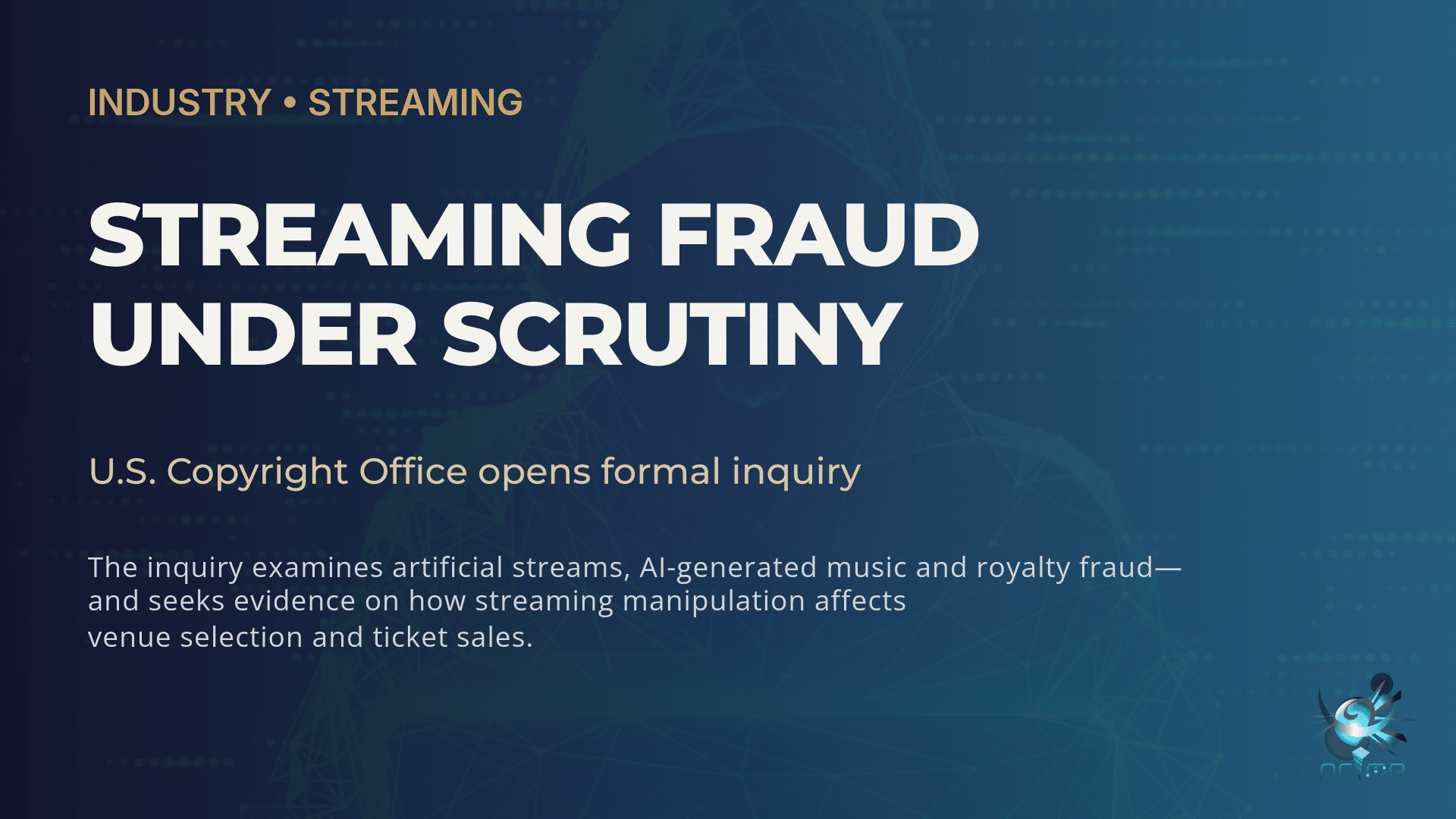
“Streaming Fraud Under Scrutiny,” announcing a U.S. Copyright Office inquiry into artificial streams, AI-generated music, royalty fraud, and potential effects on venue selection and ticket sales. Gold and white text overlays a dark blue digital figure, with the Prime logo at lower right.

U.S. Copyright Office Opens Streaming Fraud Inquiry With Live Music in Focus

October 9, 2026 by PrimeEV
Artificial Intelligence, Concert Promotion, Live Music, Music Royalties, music streaming, streaming fraud, Ticket Sales, U.S. Copyright Office

U.S. Copyright Office Opens Streaming Fraud Inquiry With Live Music in Focus

The U.S. Copyright Office has opened a public inquiry into music streaming fraud, seeking evidence on how artificial listening activity affects royalties, industry practices and the live music business.

In its October 7 announcement, the Office said it is gathering information about the prevalence of streaming fraud, efforts to combat it and potential voluntary, statutory or regulatory solutions. The inquiry follows a request from Representative Scott Fitzgerald and will help inform Congress’s understanding of the issue.

For concert promoters and venue operators, one part of the inquiry deserves particular attention: the Office explicitly asks how streaming fraud relates to venue selection, ticket sales and spending on food, beverages, merchandise and parking.

Why the Inquiry Reaches Into Live Music

Question five asks for data connecting streaming fraud to live performances, including room selection, ticket purchases and ancillary sales. That puts the reliability of digital audience information directly within the inquiry’s scope.

For a promoter, the practical concern is straightforward: an inflated audience signal can make demand appear stronger than it is. If that signal influences a booking decision, it could contribute to an oversized room, an unrealistic artist guarantee or a marketing budget built around listeners who are unlikely to purchase tickets.

Those are potential business consequences, rather than losses the Office has quantified. The inquiry is seeking evidence about these relationships; it does not establish how many concerts have been affected or assign a dollar value to lost ticket revenue.

Streaming popularity also does not translate directly into local ticket demand. A mismatch between listening figures and attendance is not, by itself, evidence of fraud. For booking decisions, streaming data is most useful when considered alongside verified ticket history, audience geography, comparable shows and the strength of an artist’s local following.

How Music Streaming Fraud Works

The Office’s Notice of Inquiry describes several methods used to inflate listening figures, including bot farms, click farms, playlist stuffing and account hijacking. It also addresses fraudulent ownership claims involving other people’s recordings or manipulated versions of existing works.

These practices can divert money from legitimate listening activity. Under a pro-rata royalty model, a service allocates royalties according to each recording’s share of qualifying streams. Artificial plays can increase a fraudulent recording’s share of that pool, reducing the amount available to other rights holders.

The consequences can extend beyond payments. The notice discusses distorted playlist placement, recommendation systems and audience data used to make business decisions, including when and where an artist should tour.

AI-Generated Music Is Part of the Inquiry

The Office is also requesting information about the relationship between streaming fraud, AI-generated music and royalties for musical works and sound recordings. The issue involves both the content entering streaming services and the listening activity used to generate payments.

AI-generated content and fraudulent streaming are distinct questions. The presence of AI in a recording does not, on its own, establish that its streams are artificial. Conversely, manipulated listening activity can involve recordings regardless of how they were produced.

Related platform-level measures were explored in PrimeEV’s coverage of Qobuz’s AI labeling and streaming-fraud controls. The federal inquiry takes a broader approach, seeking information across the industry about the problem’s scale and the effectiveness of different responses.

Platforms, Distributors and Royalty Safeguards

The inquiry asks whether industry policies or practices inadvertently contribute to fraud and how effectively stakeholders prevent or detect it. Areas under examination include customer and content verification, trusted-distributor policies, royalty clawbacks, fines and content removal.

The Office also seeks input on information sharing, metadata standards and a possible shared database of known streaming fraud. Its background discussion identifies a recurring challenge: operators removed by one distributor may continue their activity through another.

Potential responses under consideration range from voluntary industry practices to legislative or regulatory changes. The notice also asks about criminal enforcement. At this stage, the Office is gathering evidence and recommendations; the announcement does not impose new requirements on artists, platforms or distributors.

Public Comments Are Due in November

Initial written comments are due by November 23, 2026, at 11:59 p.m. Eastern Time. Reply comments are due by December 21, 2026, at 11:59 p.m. Eastern Time. Submission instructions and supporting materials are available on the Copyright Office’s Music Streaming Fraud policy page.

For the live music sector, the comment process creates an opportunity to explain how audience data informs real booking decisions. Documented examples of its use in venue selection, ticket forecasting and event planning could help establish where streaming manipulation creates measurable harm—and where the evidence remains incomplete.

Sources:

  • U.S. Copyright Office — Notice of Inquiry Announcement, October 7, 2026
  • Federal Register — Music Streaming Fraud: Notice of Inquiry, Docket No. 2026-6
  • U.S. Copyright Office — Music Streaming Fraud Policy Page and Comment Instructions

MORE FROM PRIMEEV NEWS

divider
VIEW ALL
  • Charlotte de Witte at the Great Pyramid of Giza news banner with ivory and gold text over a muted photograph of a Giza pyramid and the Sphinx.
    Charlotte de Witte at the Great Pyramid of Giza
  • “Streaming Fraud Under Scrutiny,” announcing a U.S. Copyright Office inquiry into artificial streams, AI-generated music, royalty fraud, and potential effects on venue selection and ticket sales. Gold and white text overlays a dark blue digital figure, with the Prime logo at lower right.
    U.S. Copyright Office Opens Streaming Fraud Inquiry With Live Music in Focus
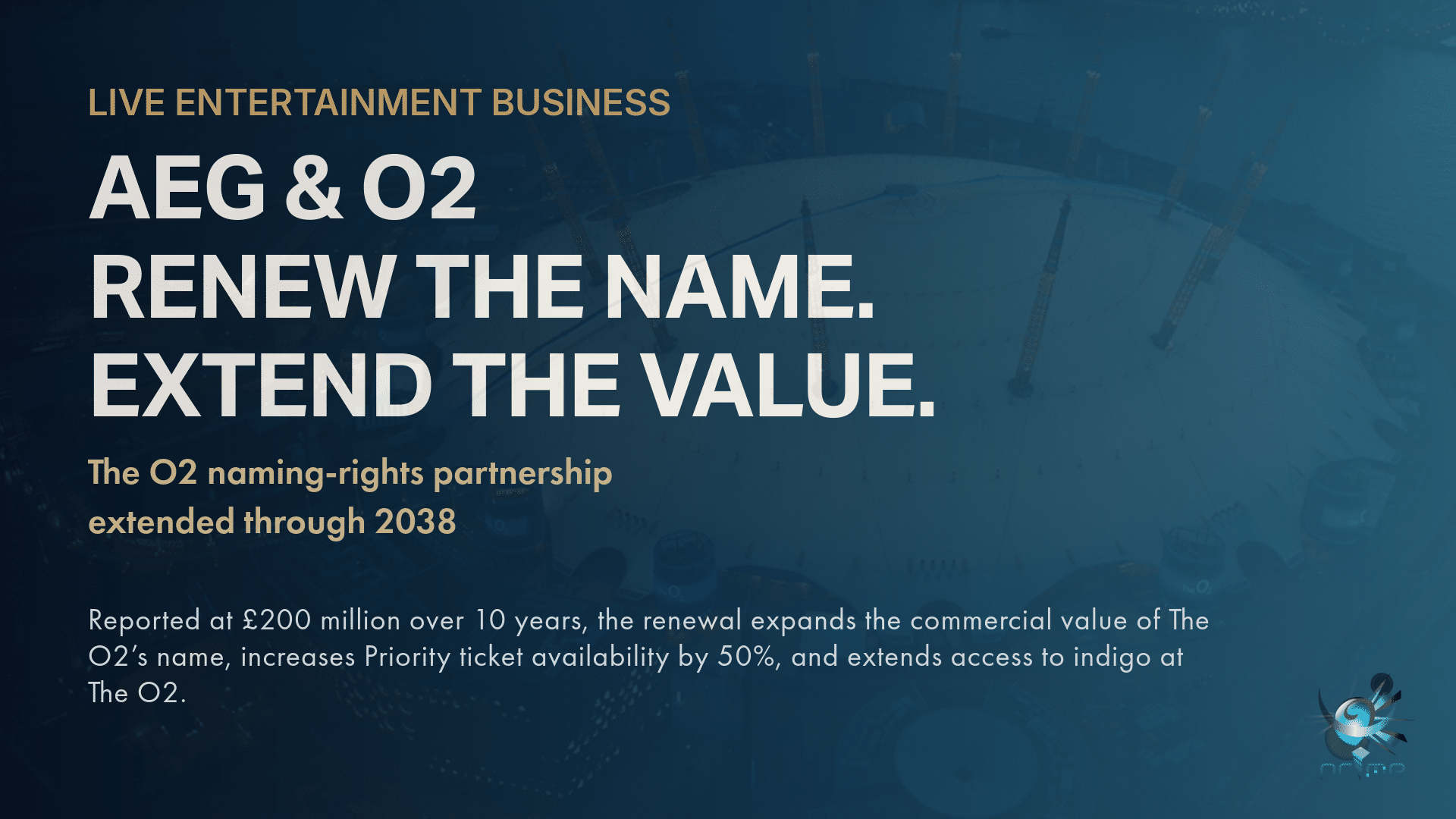
  • Aerial view of London’s The O2 beneath a blue overlay, with headline text announcing AEG and O2’s naming-rights renewal through 2038.
    AEG and O2 Renew Naming Rights Through 2038
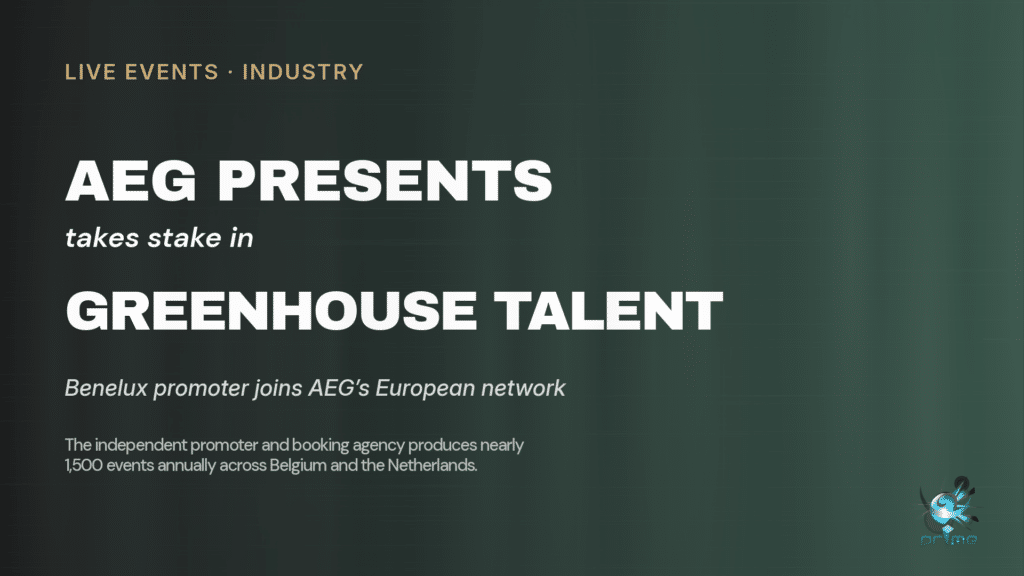
AEG Presents takes a stake in Greenhouse Talent, a Benelux promoter and booking agency producing nearly 1,500 events annually across Belgium and the Netherlands.

AEG Presents Invests in Greenhouse Talent as European Promoter Network Expands

September 23, 2026 by PrimeEV
AEG Presents, Benelux, Concert Promotion, European Live Music, Greenhouse Talent, Live Events, Music Industry, Promoter Consolidation

AEG Presents Invests in Greenhouse Talent as European Promoter Network Expands

AEG Presents has invested in Greenhouse Talent, one of the largest independent concert promoters and booking agencies in the Benelux, extending the global live-entertainment company’s presence across Europe.

The companies announced the partnership on September 14. Financial terms and the size of AEG Presents’ stake were not disclosed. Greenhouse Talent will continue operating from its offices in Ghent, Belgium, and Breda, the Netherlands, under its existing leadership and identity, according to Greenhouse Talent’s announcement.

Greenhouse Talent Brings Significant Benelux Scale

Founded in 2005 by Pascal Van De Velde, Greenhouse Talent has developed into a major regional promoter with approximately 60 employees across Belgium and the Netherlands. The company promotes close to 1,500 events annually across music, comedy and other forms of live entertainment.

Its activities extend beyond traditional concert promotion. Greenhouse Talent has worked with artists and productions including Hans Zimmer, Massive Attack, Laufey, Bryan Adams, Erykah Badu, Diana Ross and Rammstein, while also producing events such as Gent Jazz and Spoorpark LIVE. Music Business Worldwide reported that the company will retain its existing structure as part of the agreement.

Greenhouse Talent Retains Its Identity

The partnership is structured to preserve Greenhouse Talent’s existing management, local market knowledge and established artist relationships.

Greenhouse Talent described the agreement as the formalization of a longstanding relationship between the two companies. Its existing offices, leadership, and company identity will remain in place while the promoter gains access to AEG Presents’ broader international network.

For Greenhouse Talent, that structure provides the resources and global reach of one of the world’s largest live-entertainment companies without eliminating the regional organization that built the business.

AEG Presents Continues European Expansion

The Greenhouse Talent investment also fits within a broader expansion by AEG Presents across Europe.

Earlier in September, AEG Presents opened a dedicated office in Berlin as it expanded its German operations. The company had previously taken a partnership stake in German promoter MCT Agentur, while its European network also includes operations and partnerships across markets including the United Kingdom, France, and Norway.

Music Business Worldwide reported on AEG Presents’ Berlin expansion, another indication of the company’s continued investment in regional European markets.

Adam Wilkes, president and CEO of AEG Presents Europe and Asia-Pacific, said the Greenhouse Talent partnership expands AEG’s European footprint while creating additional opportunities for artists and audiences across the region.

Regional Promoters Remain Strategically Valuable

The transaction is another example of the growing importance of partnerships between global live-event companies and established regional promoters.

Rather than building every market from the ground up, international operators can expand by investing in companies that already possess local venue relationships, artist connections, market knowledge, and established audiences.

That model allows regional promoters to retain much of their existing identity while gaining access to larger touring networks, international resources, and broader cross-market opportunities.

For the broader live-events business, the AEG Presents–Greenhouse Talent deal reflects an increasingly interconnected concert industry in which local expertise remains valuable as international promoter networks continue to expand.

MORE FROM PRIMEEV NEWS

divider
VIEW ALL
  • Charlotte de Witte at the Great Pyramid of Giza news banner with ivory and gold text over a muted photograph of a Giza pyramid and the Sphinx.
    Charlotte de Witte at the Great Pyramid of Giza
  • “Streaming Fraud Under Scrutiny,” announcing a U.S. Copyright Office inquiry into artificial streams, AI-generated music, royalty fraud, and potential effects on venue selection and ticket sales. Gold and white text overlays a dark blue digital figure, with the Prime logo at lower right.
    U.S. Copyright Office Opens Streaming Fraud Inquiry With Live Music in Focus
  • Aerial view of London’s The O2 beneath a blue overlay, with headline text announcing AEG and O2’s naming-rights renewal through 2038.
    AEG and O2 Renew Naming Rights Through 2038

Newsletter Registration

Follow Us


  • Site Terms Of Use
  • Privacy Policy
© Prime Entertainment Ventures, LLC All Rights Reserved.