• About
  • Shows
  • Artist Profiles
  • Releases
  • News
  • Contact
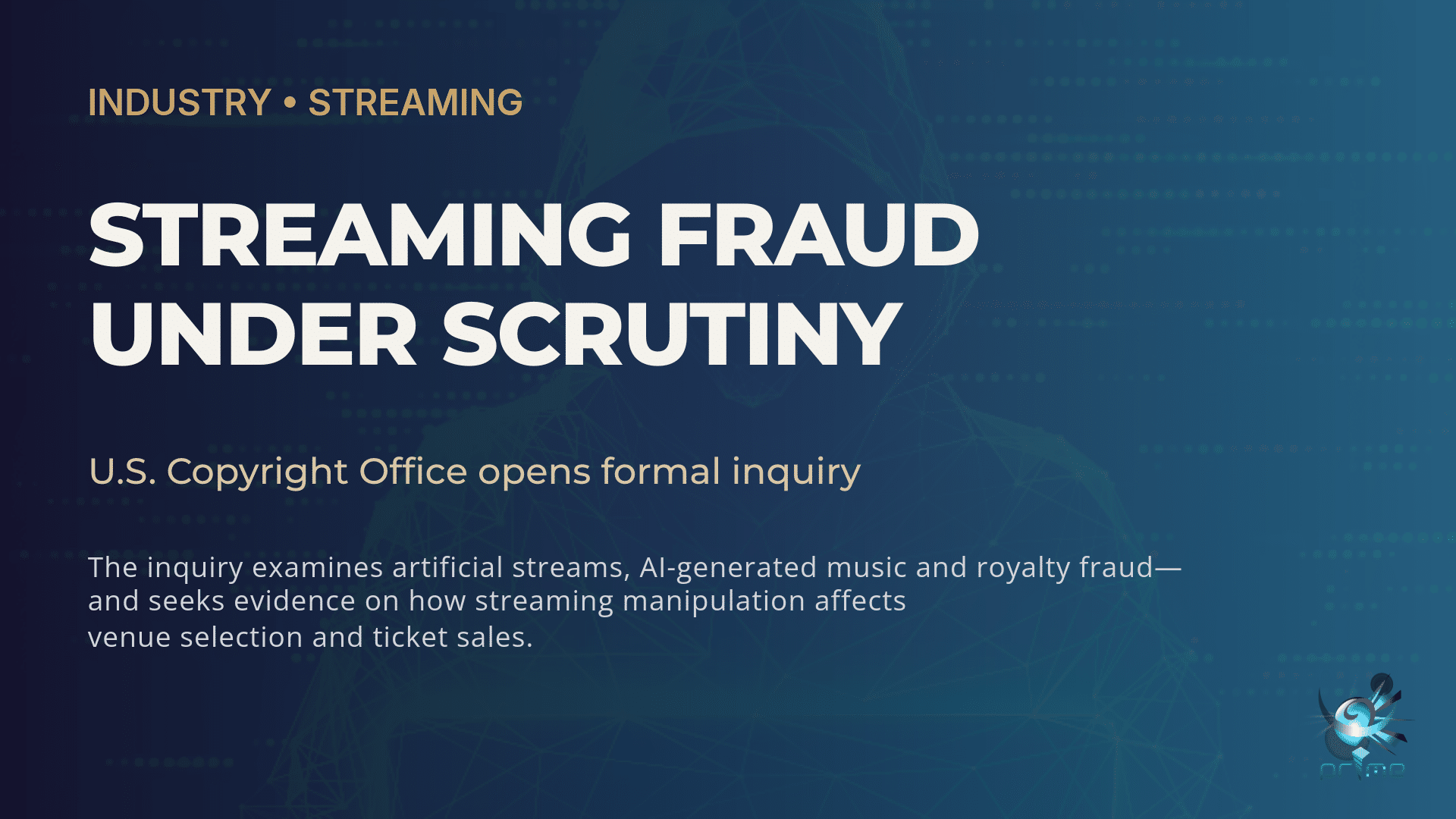
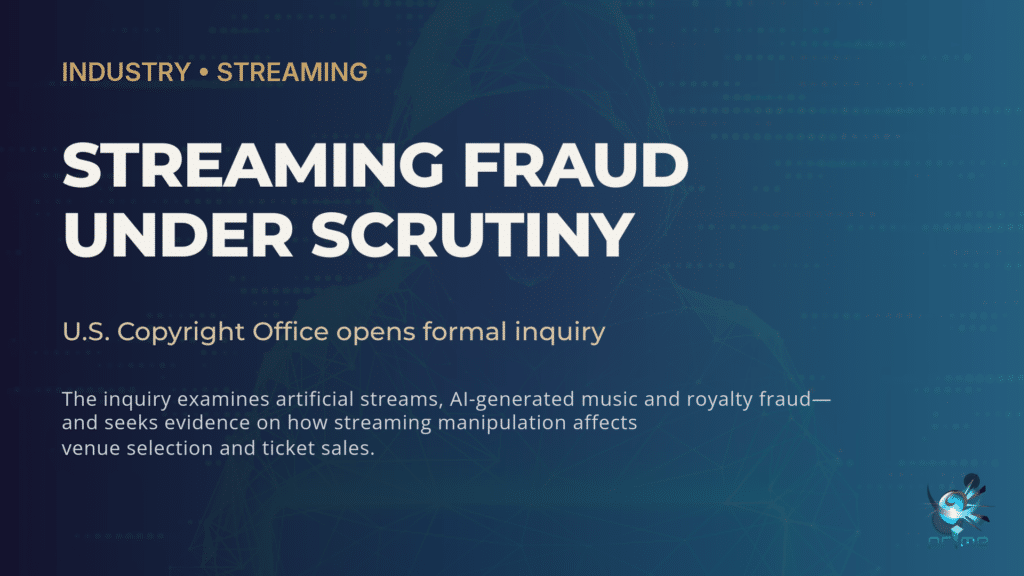
“Streaming Fraud Under Scrutiny,” announcing a U.S. Copyright Office inquiry into artificial streams, AI-generated music, royalty fraud, and potential effects on venue selection and ticket sales. Gold and white text overlays a dark blue digital figure, with the Prime logo at lower right.

U.S. Copyright Office Opens Streaming Fraud Inquiry With Live Music in Focus

October 9, 2026 by PrimeEV
Artificial Intelligence, Concert Promotion, Live Music, Music Royalties, music streaming, streaming fraud, Ticket Sales, U.S. Copyright Office

U.S. Copyright Office Opens Streaming Fraud Inquiry With Live Music in Focus

The U.S. Copyright Office has opened a public inquiry into music streaming fraud, seeking evidence on how artificial listening activity affects royalties, industry practices and the live music business.

In its October 7 announcement, the Office said it is gathering information about the prevalence of streaming fraud, efforts to combat it and potential voluntary, statutory or regulatory solutions. The inquiry follows a request from Representative Scott Fitzgerald and will help inform Congress’s understanding of the issue.

For concert promoters and venue operators, one part of the inquiry deserves particular attention: the Office explicitly asks how streaming fraud relates to venue selection, ticket sales and spending on food, beverages, merchandise and parking.

Why the Inquiry Reaches Into Live Music

Question five asks for data connecting streaming fraud to live performances, including room selection, ticket purchases and ancillary sales. That puts the reliability of digital audience information directly within the inquiry’s scope.

For a promoter, the practical concern is straightforward: an inflated audience signal can make demand appear stronger than it is. If that signal influences a booking decision, it could contribute to an oversized room, an unrealistic artist guarantee or a marketing budget built around listeners who are unlikely to purchase tickets.

Those are potential business consequences, rather than losses the Office has quantified. The inquiry is seeking evidence about these relationships; it does not establish how many concerts have been affected or assign a dollar value to lost ticket revenue.

Streaming popularity also does not translate directly into local ticket demand. A mismatch between listening figures and attendance is not, by itself, evidence of fraud. For booking decisions, streaming data is most useful when considered alongside verified ticket history, audience geography, comparable shows and the strength of an artist’s local following.

How Music Streaming Fraud Works

The Office’s Notice of Inquiry describes several methods used to inflate listening figures, including bot farms, click farms, playlist stuffing and account hijacking. It also addresses fraudulent ownership claims involving other people’s recordings or manipulated versions of existing works.

These practices can divert money from legitimate listening activity. Under a pro-rata royalty model, a service allocates royalties according to each recording’s share of qualifying streams. Artificial plays can increase a fraudulent recording’s share of that pool, reducing the amount available to other rights holders.

The consequences can extend beyond payments. The notice discusses distorted playlist placement, recommendation systems and audience data used to make business decisions, including when and where an artist should tour.

AI-Generated Music Is Part of the Inquiry

The Office is also requesting information about the relationship between streaming fraud, AI-generated music and royalties for musical works and sound recordings. The issue involves both the content entering streaming services and the listening activity used to generate payments.

AI-generated content and fraudulent streaming are distinct questions. The presence of AI in a recording does not, on its own, establish that its streams are artificial. Conversely, manipulated listening activity can involve recordings regardless of how they were produced.

Related platform-level measures were explored in PrimeEV’s coverage of Qobuz’s AI labeling and streaming-fraud controls. The federal inquiry takes a broader approach, seeking information across the industry about the problem’s scale and the effectiveness of different responses.

Platforms, Distributors and Royalty Safeguards

The inquiry asks whether industry policies or practices inadvertently contribute to fraud and how effectively stakeholders prevent or detect it. Areas under examination include customer and content verification, trusted-distributor policies, royalty clawbacks, fines and content removal.

The Office also seeks input on information sharing, metadata standards and a possible shared database of known streaming fraud. Its background discussion identifies a recurring challenge: operators removed by one distributor may continue their activity through another.

Potential responses under consideration range from voluntary industry practices to legislative or regulatory changes. The notice also asks about criminal enforcement. At this stage, the Office is gathering evidence and recommendations; the announcement does not impose new requirements on artists, platforms or distributors.

Public Comments Are Due in November

Initial written comments are due by November 23, 2026, at 11:59 p.m. Eastern Time. Reply comments are due by December 21, 2026, at 11:59 p.m. Eastern Time. Submission instructions and supporting materials are available on the Copyright Office’s Music Streaming Fraud policy page.

For the live music sector, the comment process creates an opportunity to explain how audience data informs real booking decisions. Documented examples of its use in venue selection, ticket forecasting and event planning could help establish where streaming manipulation creates measurable harm—and where the evidence remains incomplete.

Sources:

  • U.S. Copyright Office — Notice of Inquiry Announcement, October 7, 2026
  • Federal Register — Music Streaming Fraud: Notice of Inquiry, Docket No. 2026-6
  • U.S. Copyright Office — Music Streaming Fraud Policy Page and Comment Instructions

MORE FROM PRIMEEV NEWS

divider
VIEW ALL
  • Charlotte de Witte at the Great Pyramid of Giza news banner with ivory and gold text over a muted photograph of a Giza pyramid and the Sphinx.
    Charlotte de Witte at the Great Pyramid of Giza
  • “Streaming Fraud Under Scrutiny,” announcing a U.S. Copyright Office inquiry into artificial streams, AI-generated music, royalty fraud, and potential effects on venue selection and ticket sales. Gold and white text overlays a dark blue digital figure, with the Prime logo at lower right.
    U.S. Copyright Office Opens Streaming Fraud Inquiry With Live Music in Focus
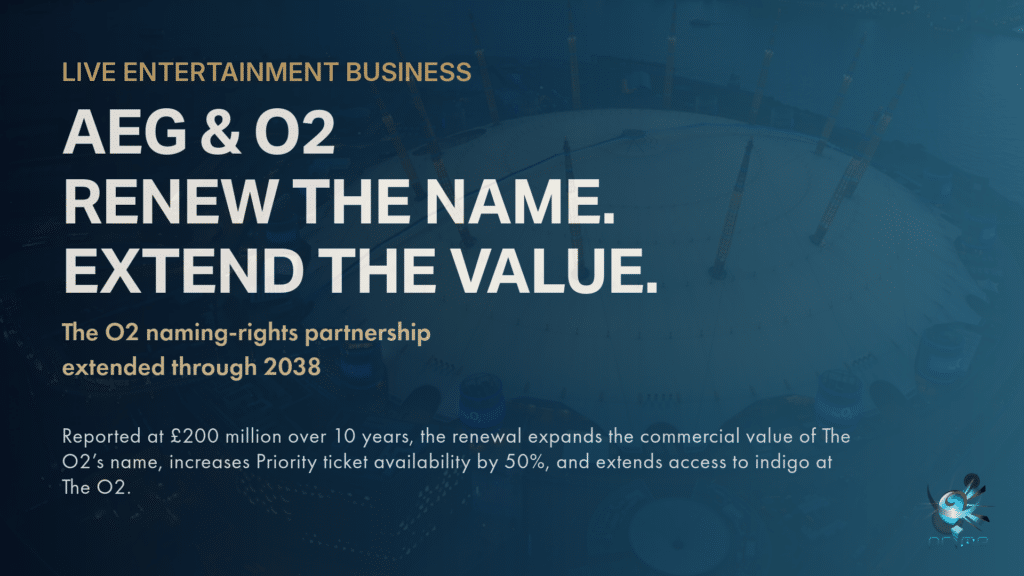
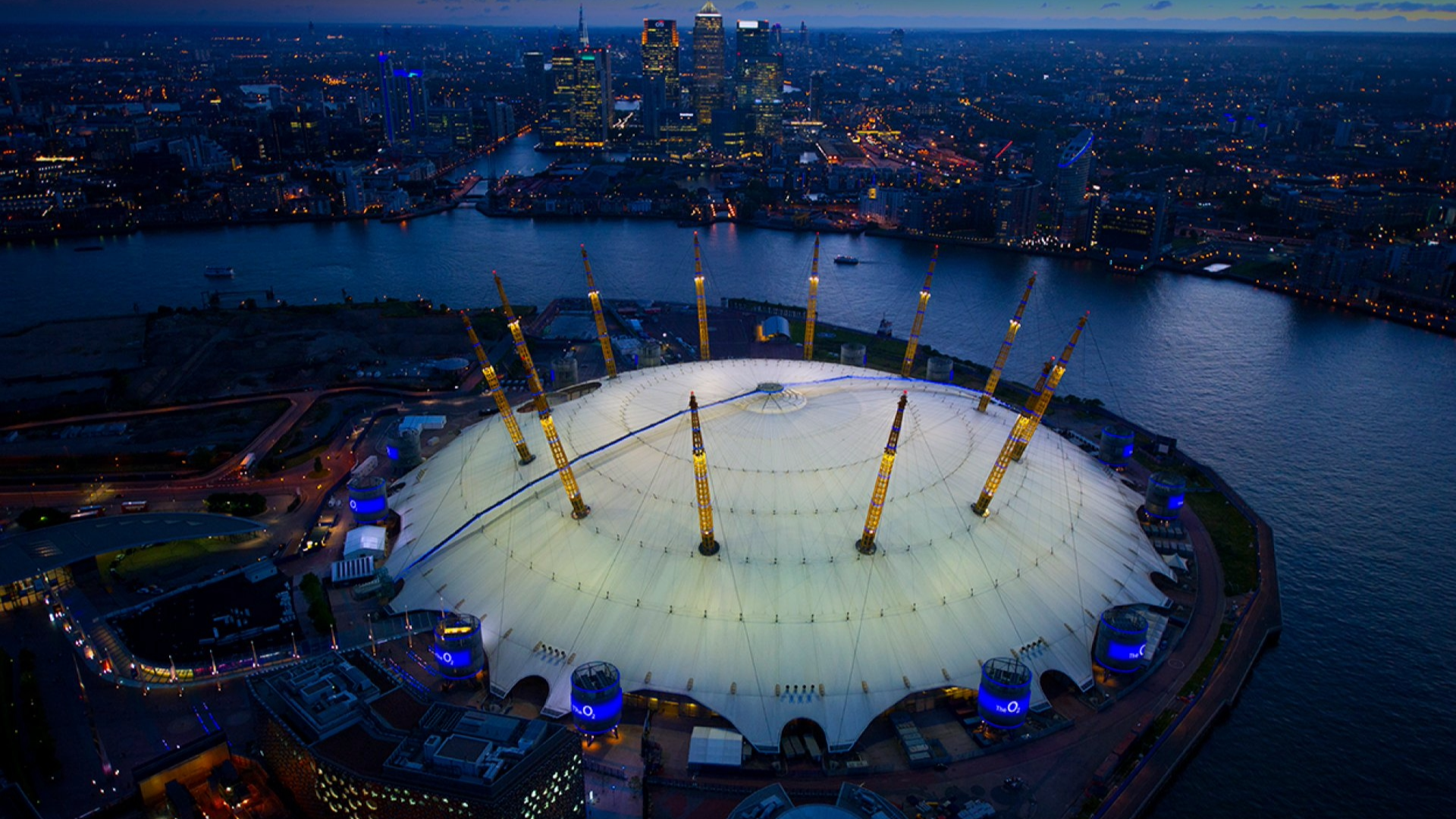
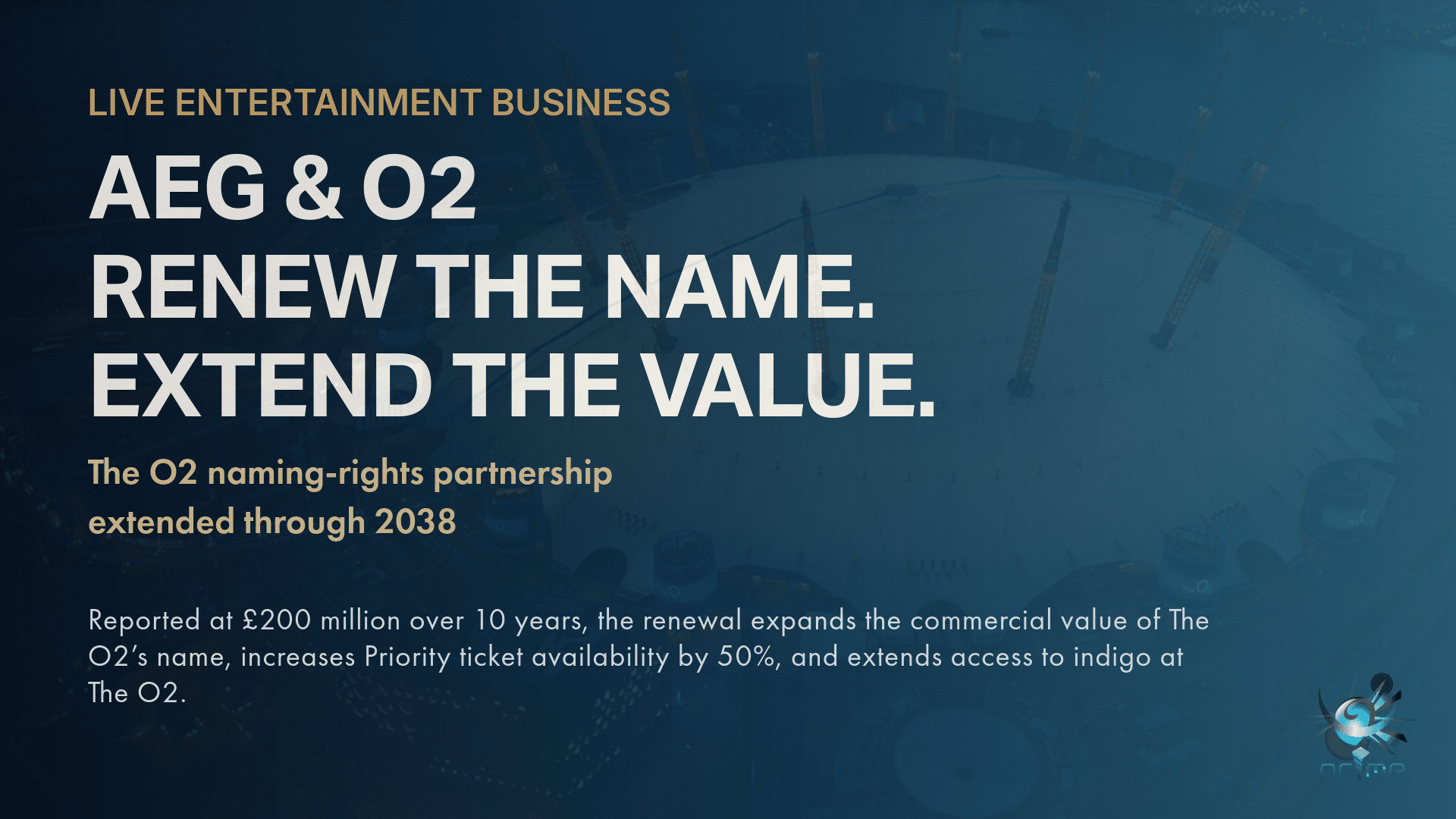
  • Aerial view of London’s The O2 beneath a blue overlay, with headline text announcing AEG and O2’s naming-rights renewal through 2038.
    AEG and O2 Renew Naming Rights Through 2038
Aerial view of London’s The O2 beneath a blue overlay, with headline text announcing AEG and O2’s naming-rights renewal through 2038.

AEG and O2 Renew Naming Rights Through 2038

October 7, 2026 by PrimeEV
AEG, indigo at The O2, Live Entertainment, London, Music Venues, Naming Rights, Priority Tickets, The O2, Venue Sponsorship, Virgin Media O2

AEG and O2 Extend The O2 Naming Rights Through 2038 in Record UK Renewal

AEG and Virgin Media O2 have extended their naming-rights partnership for London's The O2 through 2038, in an agreement the companies describe as the largest renewal of its kind in UK history. Announced on October 7, the deal combines a long-term commitment to the venue's name with expanded ticket access for customers.

According to The Guardian, the agreement is worth approximately £200 million over 10 years. AEG has not disclosed financial terms.

Editorial graphic featuring an aerial view of London's The O2, announcing AEG and O2's naming-rights renewal through 2038.

A Venue Name With Long-Term Commercial Value

The joint announcement arrives ahead of The O2's 20th anniversary in 2027. The extension preserves an identity that has become closely associated with the London entertainment complex.

For the live-events business, that continuity is part of the agreement's significance. A venue name appears repeatedly across artist announcements, ticket listings, tour schedules, and audience conversations. Maintaining that association over decades can give a sponsor a presence that lasts well beyond any individual campaign.

Our reading is that the renewal illustrates how an established venue identity can support a broader commercial relationship. AEG supplies the setting and event activity around which the partnership operates; O2 connects that activity to benefits its customers can use.

Priority Tickets Expand Beyond the Main Arena

Under the new agreement, O2 and Virgin Media broadband customers will have access to 50% more tickets to shows at The O2 through Priority Tickets. As Music Business Worldwide reports, Priority access will also extend for the first time to indigo at The O2, the complex's 2,750-capacity venue.

The increase concerns the ticket inventory available through Priority. It does not represent a 50% increase in the arena's capacity or the total number of tickets available for every show.

The indigo addition broadens the partnership's reach within the complex. It gives the customer-benefit program a presence at a smaller scale, where the relationship between artist, audience, and room can differ substantially from an arena performance. That creates scope for the sponsorship to connect with fans across more stages of an artist's live career.

Why the Deal Matters Beyond Sponsorship

The commercial logic rests on connecting recognition with a practical reason to remain engaged. Naming rights make the brand visible; ticket access gives eligible customers a benefit attached to that visibility. Whether the expanded offering improves retention or attracts new customers will depend on its use and perceived value.

A related theme runs through PrimeEV's coverage of Apple Music Hall, where recording and broadcasting allow a small London venue to reach audiences beyond the room. The operating models differ, but both demonstrate how a venue can support a business relationship extending beyond admission revenue.

For promoters and venue operators, the useful question is what a partnership enables: access, repeat engagement, distinctive experiences, or distribution. The O2 renewal shows how a familiar name and tangible audience benefits can form part of the same long-term agreement.

Sources:

  • AEG International — AEG and O2 Extend Landmark The O2 Naming Rights Partnership Until 2038
  • The Guardian — O2 signs record deal to keep London venue’s naming rights
  • Music Business Worldwide — London's O2 Arena keeps its name until 2038 as AEG and O2 strike UK's largest-ever naming rights renewal

MORE FROM PRIMEEV NEWS

divider
VIEW ALL
  • Charlotte de Witte at the Great Pyramid of Giza news banner with ivory and gold text over a muted photograph of a Giza pyramid and the Sphinx.
    Charlotte de Witte at the Great Pyramid of Giza
  • “Streaming Fraud Under Scrutiny,” announcing a U.S. Copyright Office inquiry into artificial streams, AI-generated music, royalty fraud, and potential effects on venue selection and ticket sales. Gold and white text overlays a dark blue digital figure, with the Prime logo at lower right.
    U.S. Copyright Office Opens Streaming Fraud Inquiry With Live Music in Focus
  • Aerial view of London’s The O2 beneath a blue overlay, with headline text announcing AEG and O2’s naming-rights renewal through 2038.
    AEG and O2 Renew Naming Rights Through 2038
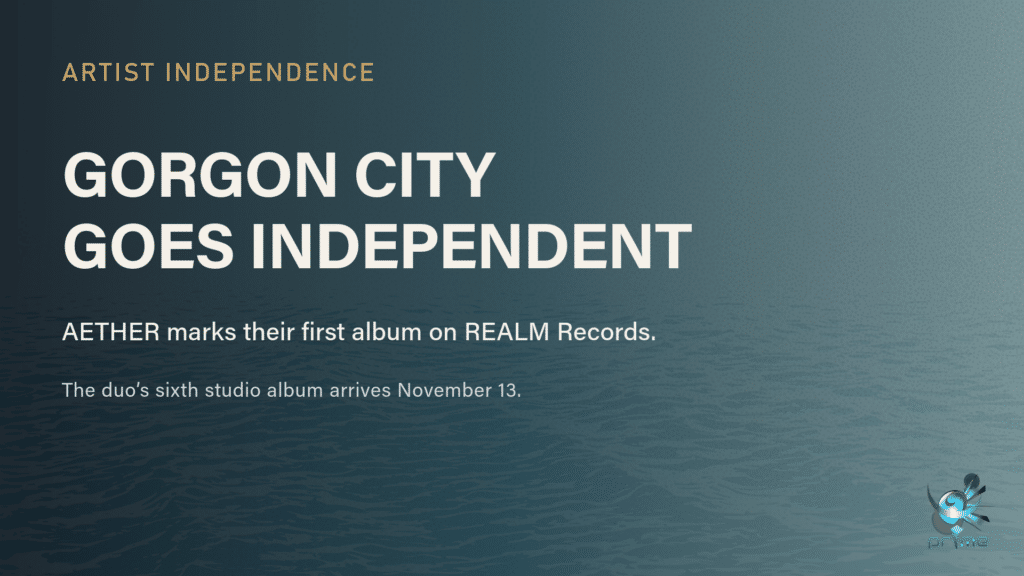
Gorgon City goes independent with AETHER, their first album on REALM Records, arriving November 13, over a textured blue background with waves.

Gorgon City Goes Independent With AETHER, Their First Album on REALM Records

October 2, 2026 by PrimeEV
AETHER, Artist Independence, Gorgon City, House Music, Independent Labels, New Albums, REALM Records

Gorgon City Goes Independent With AETHER, Their First Album on REALM Records

Gorgon City is bringing its next album home. AETHER, due November 13, 2026, will be the duo’s sixth studio album and its first full-length release through its own REALM Records label. After five albums released through Universal-affiliated labels, the move gives the imprint a new role in the partnership’s recording career.

The announcement puts creative independence at the center of the release. Gorgon City described making the record with “total creative freedom” and “no outside pressure,” emphasizing the enjoyment of writing together and collaborating with other musicians. For Kye Gibbon and Matt Robson-Scott, the change is both a release decision and a statement about how they want to work.

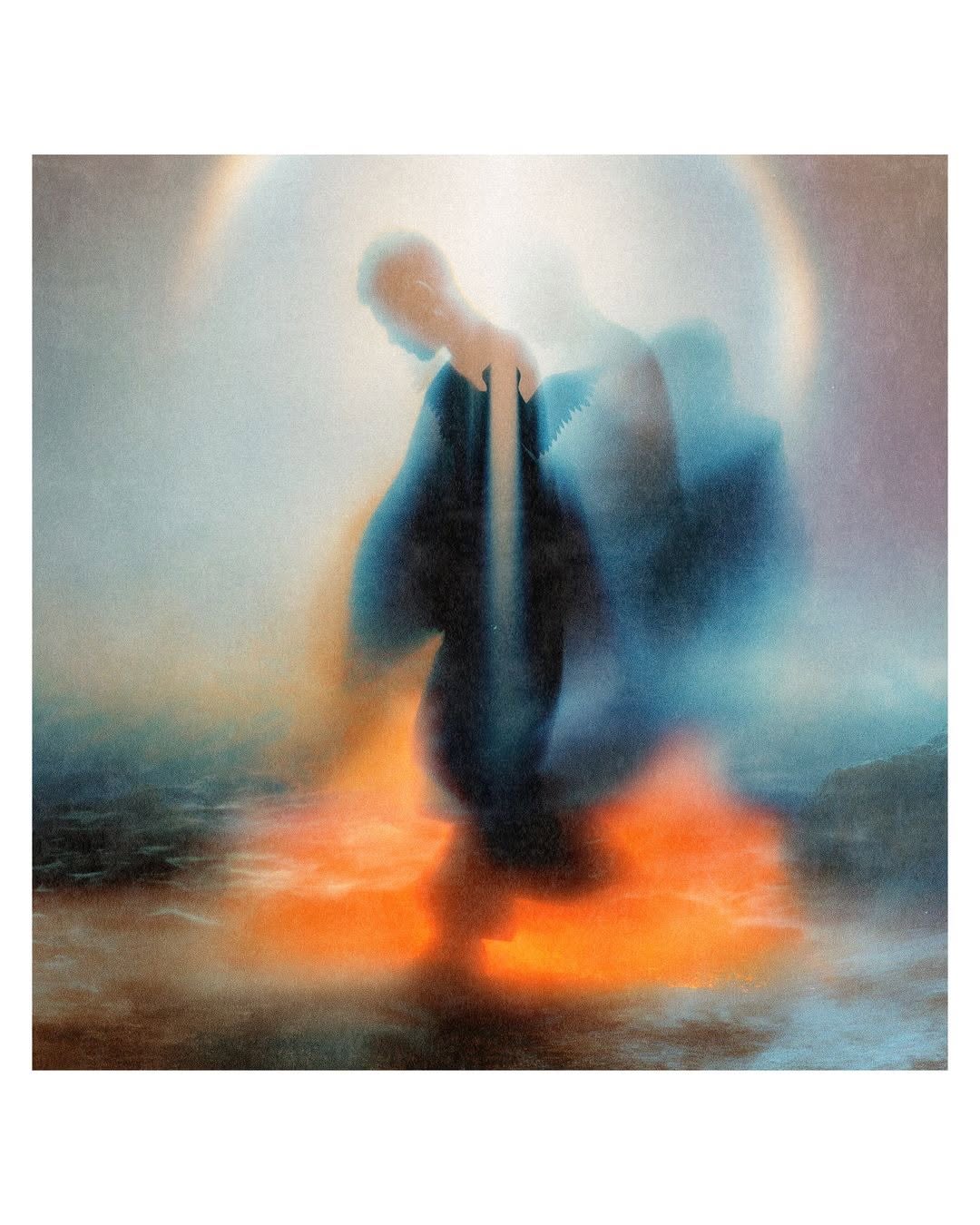
Gorgon City’s AETHER album cover featuring overlapping blurred figures, a pale halo, blue haze, and orange light reflected across water.
AETHER album artwork by Leif Podhajsky.

From Building a Label to Releasing Through It

Founded in 2017, REALM already has a history beyond this album. Its official label hub brings together releases from other producers, event listings, a Spotify playlist, and demo submissions. That combination shows how the project has developed into a platform for music and an audience around it.

With AETHER, Gorgon City is using that established platform for a complete studio album. The distinction matters: launching an artist label is one step; choosing it as the home for a major body of your own work is another. The duo is placing REALM at the center of its next album campaign, connecting the artist name and the label more closely.

The release also brings REALM’s roles as a label and an artist platform closer together. A label can introduce listeners to other producers while building an identity that extends beyond its founders’ releases. When those founders bring their own album to the platform, the audience they have developed as artists and the audience they have cultivated as curators have a shared destination.

AETHER Arrives November 13

Apple Music’s album listing confirms 12 tracks, the November 13 release date, and a 2026 REALM Records phonographic copyright credit. The album follows Reverie, released in 2024, and arrives with cover artwork by Leif Podhajsky.

Listeners can find the available pre-save and pre-add options through the official AETHER release page. The music will ultimately define the record, but its release already marks a concrete development for REALM: the label Gorgon City built is becoming the home of its next full-length project.

Sources and official links:

  • Gorgon City — AETHER official release page
  • Apple Music — AETHER album listing
  • REALM Records — Official label hub

Listen on Spotify

MORE FROM PRIMEEV NEWS

divider
VIEW ALL
  • Charlotte de Witte at the Great Pyramid of Giza news banner with ivory and gold text over a muted photograph of a Giza pyramid and the Sphinx.
    Charlotte de Witte at the Great Pyramid of Giza
  • “Streaming Fraud Under Scrutiny,” announcing a U.S. Copyright Office inquiry into artificial streams, AI-generated music, royalty fraud, and potential effects on venue selection and ticket sales. Gold and white text overlays a dark blue digital figure, with the Prime logo at lower right.
    U.S. Copyright Office Opens Streaming Fraud Inquiry With Live Music in Focus
  • Aerial view of London’s The O2 beneath a blue overlay, with headline text announcing AEG and O2’s naming-rights renewal through 2038.
    AEG and O2 Renew Naming Rights Through 2038
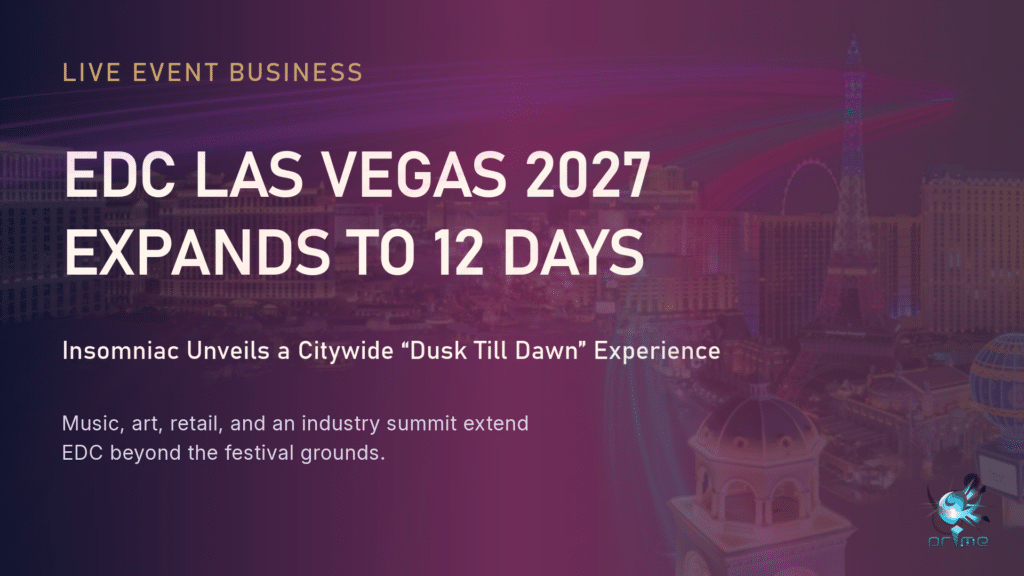
Las Vegas skyline beneath a purple gradient with the headline “EDC Las Vegas 2027 Expands to 12 Days” and Prime Entertainment Ventures branding.

Insomniac Expands EDC Las Vegas 2027 Into a 12-Day Citywide Experience

October 1, 2026 by PrimeEV
Dusk Till Dawn, EDC Las Vegas, insomniac, Las Vegas, Live Entertainment, Map Point Summit, Music Festivals, Music Tourism

Insomniac Expands EDC Las Vegas 2027 Into a 12-Day Citywide Experience

EDC Las Vegas 2027 is taking shape beyond the Speedway. In a September 30 announcement, Insomniac detailed its citywide programming for Dusk Till Dawn, bringing parties, shopping, art, and an industry gathering to Las Vegas from May 13–24, 2027.

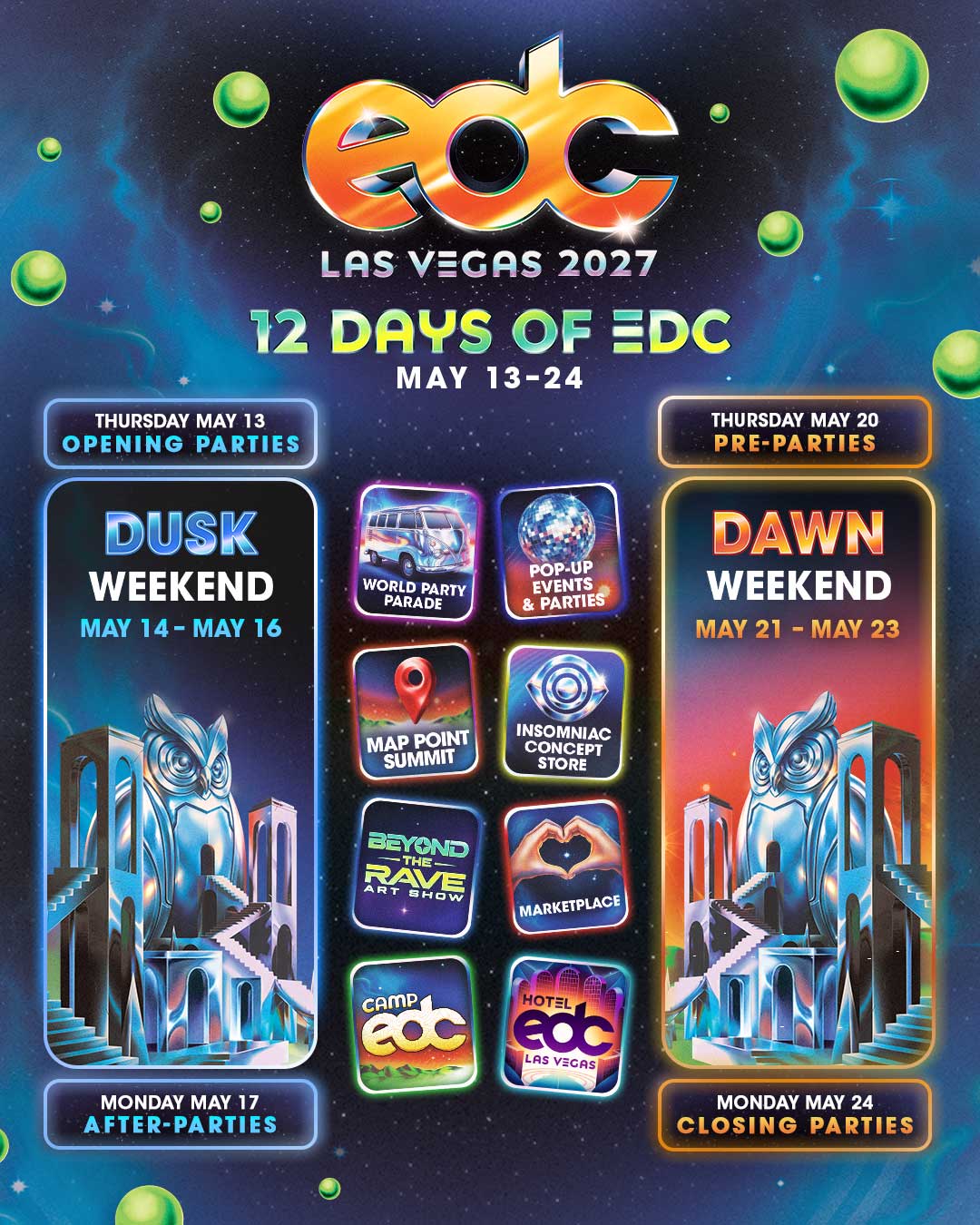
The two-weekend format was announced in May. EDC Dusk takes place May 14–16, followed by EDC Dawn on May 21–23, both at Las Vegas Motor Speedway. The latest announcement explains what will surround those six festival nights and connect the weekends.

Official 12 Days of EDC Las Vegas 2027 calendar showing the Dusk and Dawn festival weekends and citywide programming from May 13–24.
EDC Las Vegas 2027’s Dusk Till Dawn schedule spans May 13–24. Graphic: Insomniac. Select image to enlarge.

EDC Moves Further Into Las Vegas

Warehouse parties, club events, and pop-ups at landmarks and galleries will extend EDC across the city. Opening and closing parties will frame the weekends, while the free, all-ages World Party Parade returns.

Hotel EDC at Virgin Hotels Las Vegas will host several additions:

  • Map Point Summit: A new gathering focused on finding a path into electronic music culture and the industry.
  • Insomniac Concept Store: Merchandise, collaborations, vinyl, artist appearances, and exclusive releases.
  • Beyond the Rave Art Show: An exhibition exploring rave culture through photography, paintings, flyers, sculpture, and more.
  • Marketplace: Independent businesses, artists, and makers offering products from across the rave community.

The store and art show will be free to enter throughout the 12 days. The marketplace is scheduled for Tuesday through Thursday, while summit on-sale details remain forthcoming.

A Reason to Stay Between Weekends

The accommodation component helps connect the expanded schedule. Insomniac’s Camp EDC announcement confirms that guests with 12-day camping passes can remain from May 13–24 and come and go during the intervening week. Festival pass holders attending either one or both weekends are eligible to purchase that camping option.

That creates a practical base for a longer visit. Guests can build a trip around one festival weekend or stay through both, with activities providing reasons to remain in Las Vegas between them.

On the official 12 Days of EDC page, founder Pasquale Rotella describes a mix of daytime and overnight experiences, with both ticketed and free programming. Attendees will be able to choose among those experiences rather than follow one continuous itinerary.

The Business Behind the Citywide Expansion

For the live-event business, the strategy creates more opportunities to reach an audience beyond festival admission. Retail, hospitality, nightlife, and cultural programming can each become part of the same trip, with EDC serving as the reason to visit.

Free programming also gives the brand a way to reach people outside the Speedway audience. An exhibition, marketplace, or parade can introduce visitors to EDC without requiring a festival pass, while paid experiences offer additional ways to spend within its orbit.

This destination approach connects with the wider music-tourism discussion explored in PrimeEV’s coverage of the American Music Tourism Act: concerts and festivals can motivate travel that extends to other venues, businesses, and cultural destinations.

The commercial potential will depend on participation, pricing, and how well the experiences work together. Insomniac’s plan gives EDC a larger role in the visitor’s itinerary, with the festival weekends anchoring a broader stay in Las Vegas.

Sources:

  • Insomniac — Insomniac Announces 12 Days of EDC 2027: Dusk Till Dawn in Las Vegas, May 13–24
  • Insomniac — EDC Las Vegas Introduces New “Dusk Till Dawn” 2027 12-Day Festival Concept Spanning Two Consecutive Weekends
  • Insomniac — Insomniac Announces 12 Days of Camp EDC Las Vegas
  • EDC Las Vegas — Welcome to 12 Days of EDC

MORE FROM PRIMEEV NEWS

divider
VIEW ALL
  • Charlotte de Witte at the Great Pyramid of Giza news banner with ivory and gold text over a muted photograph of a Giza pyramid and the Sphinx.
    Charlotte de Witte at the Great Pyramid of Giza
  • “Streaming Fraud Under Scrutiny,” announcing a U.S. Copyright Office inquiry into artificial streams, AI-generated music, royalty fraud, and potential effects on venue selection and ticket sales. Gold and white text overlays a dark blue digital figure, with the Prime logo at lower right.
    U.S. Copyright Office Opens Streaming Fraud Inquiry With Live Music in Focus
  • Aerial view of London’s The O2 beneath a blue overlay, with headline text announcing AEG and O2’s naming-rights renewal through 2038.
    AEG and O2 Renew Naming Rights Through 2038
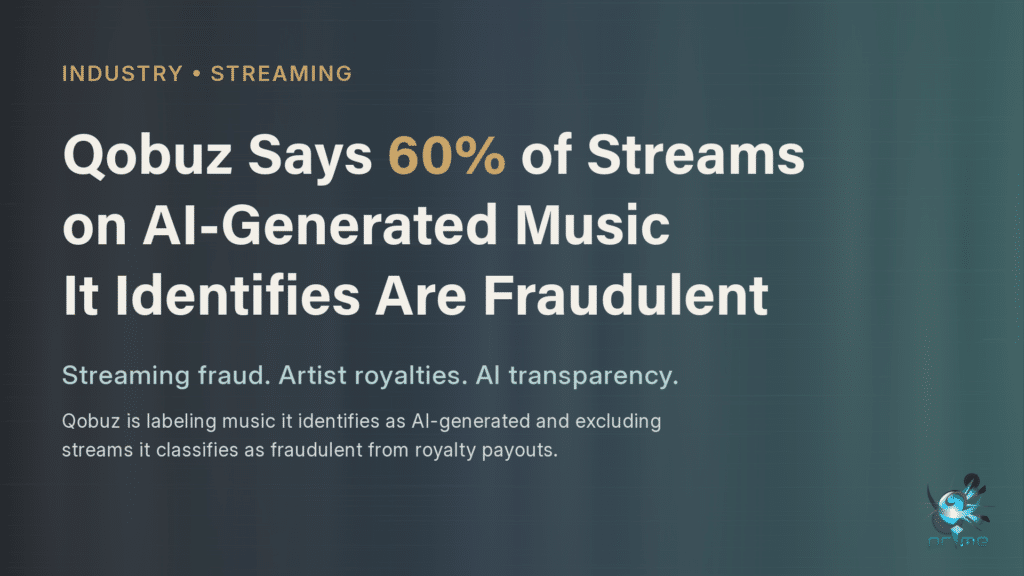
PrimeEV graphic: Qobuz says 60% of streams on music it identifies as AI-generated are fraudulent and excluded from royalty payouts.

Qobuz Says 60% of Streams on AI-Generated Music It Identifies Are Fraudulent

September 28, 2026 by PrimeEV
AI-generated music, artist royalties, music streaming, music technology, Qobuz, streaming fraud

Qobuz Says 60% of Streams on AI-Generated Music It Identifies Are Fraudulent

Qobuz says 60% of streams on tracks it identifies as AI-generated are classified as fraudulent by its anti-fraud systems and excluded from royalty payouts. The French streaming service is also making that identification visible to listeners, introducing labels on releases containing music it flags as AI-generated.

The company announced the rollout on September 24, with Music Business Worldwide reporting the development on September 28. The figures put streaming fraud, catalog management and artist compensation at the center of the story.

What the 60% figure means

According to Qobuz’s announcement, tracks identified as AI-generated account for just 0.38% of all streams on the platform. The 60% fraud figure applies specifically to streams within that identified group. It does not describe 60% of Qobuz’s overall listening activity or establish a fraud rate for AI-generated music across other services.

Qobuz says streams found to be fraudulent are excluded from reporting and royalty payments, and associated content is removed from its catalog. These are company-reported findings from its own detection systems.

Four million tracks affected by search cleanup

Qobuz also says it has removed from search more than a third of the albums it identified as AI-generated that had no listening activity. Those albums cover four million tracks.

That search cleanup is distinct from deleting fraudulent content from the catalog. As Music Business Worldwide notes, Qobuz’s updated policy allows de-indexed albums to remain findable through a direct title search. The change therefore concerns how listeners encounter those releases, rather than necessarily making them unavailable.

The release-level badge gives listeners another point of information when choosing what to play. Qobuz also keeps identified AI-generated content out of its editorial selections and algorithmic recommendations.

AI tools and human creativity

In its updated AI Charter, Qobuz supports AI tools used in an authentic human creative process, including mixing, mastering and composition assistance. Its stated objection is to industrially produced content without human creative intervention, intended to saturate catalogs or exploit royalty systems.

That distinction matters for electronic music producers. Using an AI-assisted production tool should not automatically be treated as equivalent to generating an entire recording without meaningful human creative involvement.

Detection remains imperfect. Qobuz acknowledges that no available solution can identify all AI content with certainty, particularly when human involvement is mixed into the process. Artists who believe their music has been incorrectly labeled can raise the issue through their distributor.

Why this matters for artists and listeners

The significance of the rollout is the connection between disclosure, discovery and payment. A label helps a listener make a choice; search and recommendation policies affect visibility; fraud controls determine which listening activity qualifies for royalties.

For artists, the practical questions are how accurately those systems identify abuse and how effectively they correct mistakes. For listeners, visible labeling makes a previously hidden platform judgment part of the listening experience.

Sources:

  • Qobuz — Qobuz Rolls Out a Tag to Flag AI-Generated Music
  • Music Business Worldwide — Qobuz starts tagging AI-generated music in its app – and says 60% of streams on AI tracks are fraudulent
  • Qobuz — AI Charter

MORE FROM PRIMEEV NEWS

divider
VIEW ALL
  • Charlotte de Witte at the Great Pyramid of Giza news banner with ivory and gold text over a muted photograph of a Giza pyramid and the Sphinx.
    Charlotte de Witte at the Great Pyramid of Giza
  • “Streaming Fraud Under Scrutiny,” announcing a U.S. Copyright Office inquiry into artificial streams, AI-generated music, royalty fraud, and potential effects on venue selection and ticket sales. Gold and white text overlays a dark blue digital figure, with the Prime logo at lower right.
    U.S. Copyright Office Opens Streaming Fraud Inquiry With Live Music in Focus
  • Aerial view of London’s The O2 beneath a blue overlay, with headline text announcing AEG and O2’s naming-rights renewal through 2038.
    AEG and O2 Renew Naming Rights Through 2038
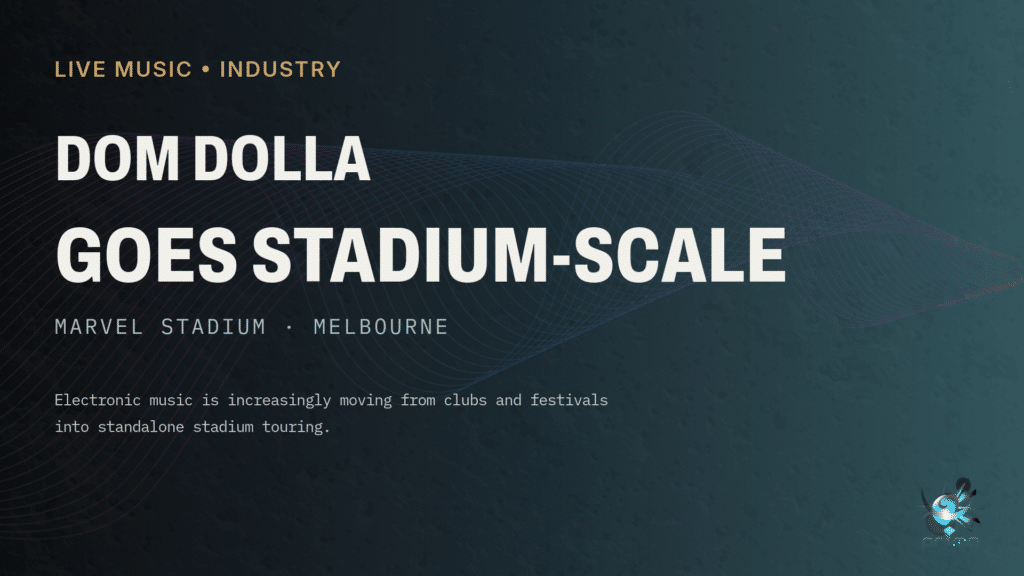
Dom Dolla stadium-scale editorial graphic for Marvel Stadium in Melbourne, highlighting electronic music’s move into standalone stadium touring.

Dom Dolla’s Sold-Out Marvel Stadium Show Signals Electronic Music’s Move Into Stadiums

September 25, 2026 by PrimeEV
Dom Dolla, Electronic Music, Frontier Touring, Live Music, Marvel Stadium, Melbourne, Music Industry, Stadium Shows, Touring, Untitled Group

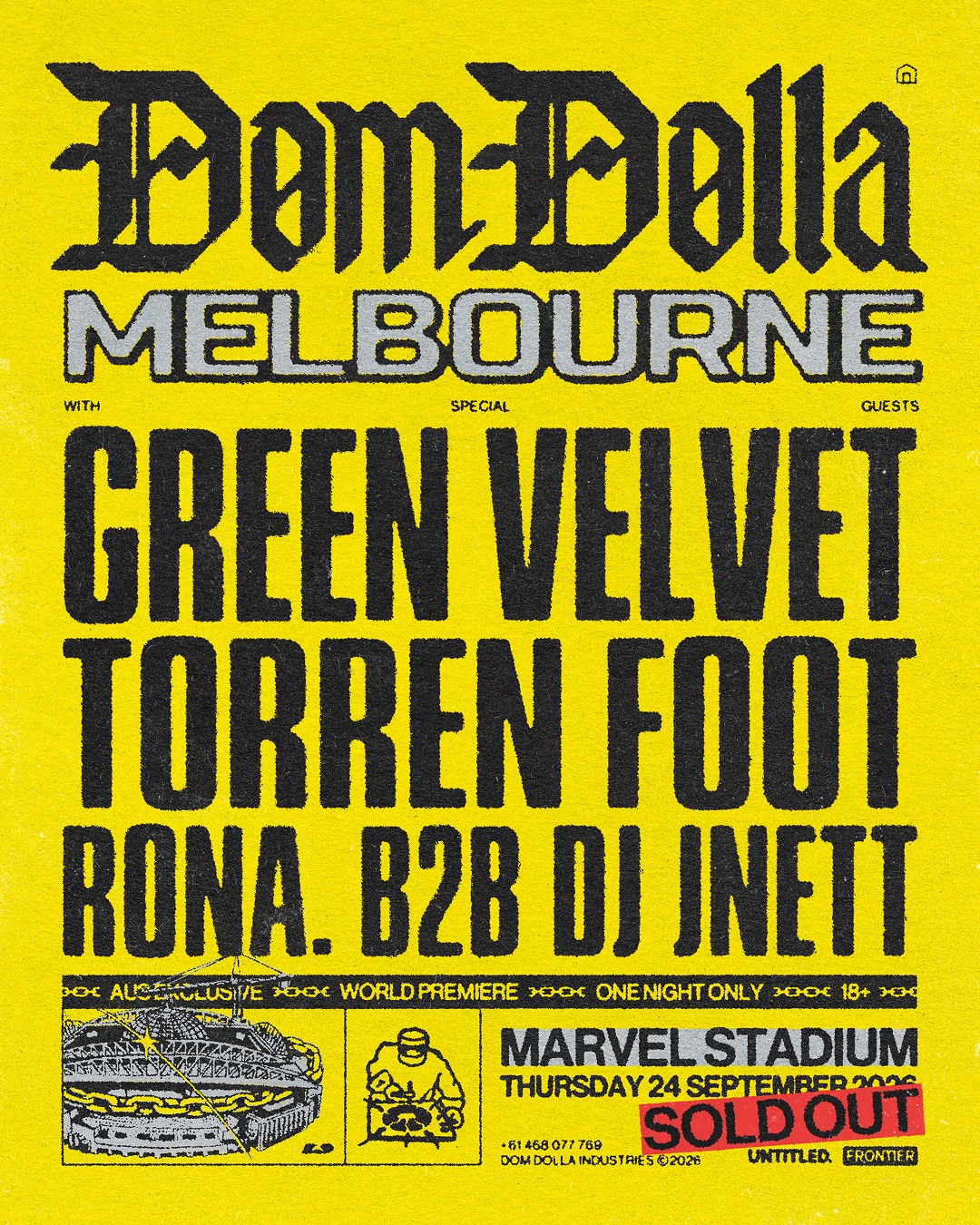
Dom Dolla performed to 60,000 fans at a sold-out Marvel Stadium in Melbourne on September 24, marking another significant step in electronic music’s move into standalone stadium-scale touring.

Presented by Untitled Group and Frontier Touring, the Australian-exclusive hometown show featured the world premiere of a new production designed specifically for the scale of Marvel Stadium.

Dom Dolla Melbourne Marvel Stadium sold-out show poster featuring Green Velvet, Torren Foot, RONA b2b DJ JNETT, and Marvel Stadium on September 24, 2026.

60,000 Fans at Marvel Stadium

Frontier Touring confirmed the post-show attendance at 60,000, describing the performance as one of the largest headline electronic-music events ever staged in Australia.

The scale is particularly significant because this was not a festival appearance or a multi-artist stadium bill built around several major headliners. Dom Dolla was the primary ticket-selling attraction, supported by Green Velvet, Torren Foot and RONA. b2b DJ JNETT.

The show also represented the world premiere of Dom Dolla’s new stadium production, designed around Marvel Stadium rather than adapting a conventional club or festival setup to a larger venue.

For electronic music, that distinction matters. Festival audiences have demonstrated for decades that dance music can attract enormous crowds. Selling tens of thousands of tickets to a standalone headline show provides a different measure of artist-driven demand.

From Clubs to Stadiums

Dom Dolla’s Melbourne performance follows his sold-out Australian stadium debut at Allianz Stadium in Sydney in December 2025. According to Frontier Touring, the Marvel Stadium show continued a run that has also included two sold-out nights at Madison Square Garden in New York.

That trajectory reflects a broader change taking place across electronic music. A growing number of artists are moving beyond clubs, warehouses and festival stages and demonstrating that their audiences can support conventional arena and stadium touring.

RÜFÜS DU SOL recently provided one of the clearest examples. Their Inhale/Exhale World Tour grossed more than $158 million and sold approximately 1.7 million tickets across 115 shows, including a Rose Bowl Stadium headline performance attended by roughly 60,000 people.

The important distinction is not simply crowd size. Electronic artists have drawn massive festival audiences for years. What is changing is the ability of individual acts to generate enough demand to support large reserved-seating venues and stadiums under their own names.

Electronic Music Is Reaching a Different Scale

Recent milestones across electronic music are increasingly difficult to treat as isolated examples.

Calvin Harris recently set a Guinness World Record after an estimated 1.6 million people attended his February 2026 DJ performance in São Paulo. While the Brazilian event was a city-scale public performance rather than a conventional ticketed stadium concert, it provides another indication of the enormous audiences major electronic artists can now reach.

Dom Dolla’s Marvel Stadium performance demonstrates a different side of that growth: 60,000 people purchasing tickets for a standalone electronic headline event in a traditional stadium environment.

That puts the show much closer to the touring model historically associated with major rock and pop acts than the club-focused infrastructure from which electronic music developed.

Australia Remains Central to Dom Dolla’s Growth

The Melbourne show also carries particular significance because Dom Dolla’s rise has remained closely connected to Australia even as his international touring profile has expanded.

Untitled Group described the Marvel Stadium appearance as a hometown stadium debut and an Australian-exclusive event. The promoter had previously announced that the show sold out after presale allocations were exhausted within hours and the remaining tickets disappeared during the general on-sale.

The lineup connected that large-scale production with the club culture underlying Dom Dolla’s career. Chicago house pioneer Green Velvet joined the bill alongside Australian artist Torren Foot and a back-to-back performance from RONA. and DJ JNETT.

A New Touring Benchmark for Electronic Artists

Dom Dolla playing to 60,000 people at Marvel Stadium does not mean electronic music is abandoning clubs and festivals. Those environments remain fundamental to the culture and economics of the genre.

What the performance demonstrates is that the upper end of the market is expanding.

A select group of electronic artists can now operate across several different levels of the live business: clubs, festivals, arenas and, increasingly, stadiums.

The significance of the Marvel Stadium show is therefore larger than a single sold-out date. It adds another verified example of an electronic artist generating stadium-level demand for a standalone headline performance.

As more artists begin testing similar formats, the question is shifting from whether electronic music can work at stadium scale to how many artists can sustain that level of demand across multiple markets.

Sources: Untitled Group and Frontier Touring.

MORE FROM PRIMEEV NEWS

divider
VIEW ALL
  • Charlotte de Witte at the Great Pyramid of Giza news banner with ivory and gold text over a muted photograph of a Giza pyramid and the Sphinx.
    Charlotte de Witte at the Great Pyramid of Giza
  • “Streaming Fraud Under Scrutiny,” announcing a U.S. Copyright Office inquiry into artificial streams, AI-generated music, royalty fraud, and potential effects on venue selection and ticket sales. Gold and white text overlays a dark blue digital figure, with the Prime logo at lower right.
    U.S. Copyright Office Opens Streaming Fraud Inquiry With Live Music in Focus
  • Aerial view of London’s The O2 beneath a blue overlay, with headline text announcing AEG and O2’s naming-rights renewal through 2038.
    AEG and O2 Renew Naming Rights Through 2038
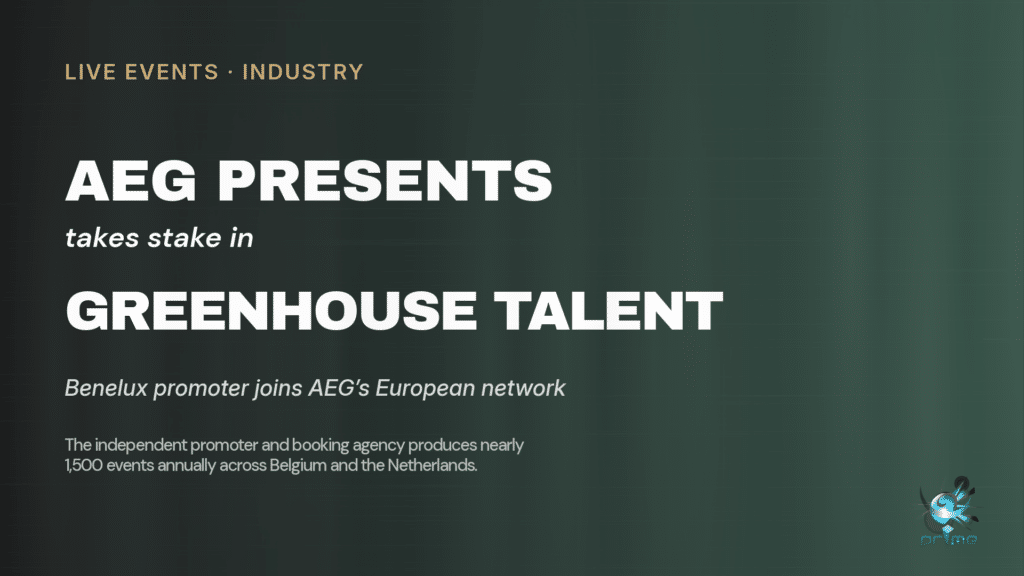
AEG Presents takes a stake in Greenhouse Talent, a Benelux promoter and booking agency producing nearly 1,500 events annually across Belgium and the Netherlands.

AEG Presents Invests in Greenhouse Talent as European Promoter Network Expands

September 23, 2026 by PrimeEV
AEG Presents, Benelux, Concert Promotion, European Live Music, Greenhouse Talent, Live Events, Music Industry, Promoter Consolidation

AEG Presents Invests in Greenhouse Talent as European Promoter Network Expands

AEG Presents has invested in Greenhouse Talent, one of the largest independent concert promoters and booking agencies in the Benelux, extending the global live-entertainment company’s presence across Europe.

The companies announced the partnership on September 14. Financial terms and the size of AEG Presents’ stake were not disclosed. Greenhouse Talent will continue operating from its offices in Ghent, Belgium, and Breda, the Netherlands, under its existing leadership and identity, according to Greenhouse Talent’s announcement.

Greenhouse Talent Brings Significant Benelux Scale

Founded in 2005 by Pascal Van De Velde, Greenhouse Talent has developed into a major regional promoter with approximately 60 employees across Belgium and the Netherlands. The company promotes close to 1,500 events annually across music, comedy and other forms of live entertainment.

Its activities extend beyond traditional concert promotion. Greenhouse Talent has worked with artists and productions including Hans Zimmer, Massive Attack, Laufey, Bryan Adams, Erykah Badu, Diana Ross and Rammstein, while also producing events such as Gent Jazz and Spoorpark LIVE. Music Business Worldwide reported that the company will retain its existing structure as part of the agreement.

Greenhouse Talent Retains Its Identity

The partnership is structured to preserve Greenhouse Talent’s existing management, local market knowledge and established artist relationships.

Greenhouse Talent described the agreement as the formalization of a longstanding relationship between the two companies. Its existing offices, leadership, and company identity will remain in place while the promoter gains access to AEG Presents’ broader international network.

For Greenhouse Talent, that structure provides the resources and global reach of one of the world’s largest live-entertainment companies without eliminating the regional organization that built the business.

AEG Presents Continues European Expansion

The Greenhouse Talent investment also fits within a broader expansion by AEG Presents across Europe.

Earlier in September, AEG Presents opened a dedicated office in Berlin as it expanded its German operations. The company had previously taken a partnership stake in German promoter MCT Agentur, while its European network also includes operations and partnerships across markets including the United Kingdom, France, and Norway.

Music Business Worldwide reported on AEG Presents’ Berlin expansion, another indication of the company’s continued investment in regional European markets.

Adam Wilkes, president and CEO of AEG Presents Europe and Asia-Pacific, said the Greenhouse Talent partnership expands AEG’s European footprint while creating additional opportunities for artists and audiences across the region.

Regional Promoters Remain Strategically Valuable

The transaction is another example of the growing importance of partnerships between global live-event companies and established regional promoters.

Rather than building every market from the ground up, international operators can expand by investing in companies that already possess local venue relationships, artist connections, market knowledge, and established audiences.

That model allows regional promoters to retain much of their existing identity while gaining access to larger touring networks, international resources, and broader cross-market opportunities.

For the broader live-events business, the AEG Presents–Greenhouse Talent deal reflects an increasingly interconnected concert industry in which local expertise remains valuable as international promoter networks continue to expand.

MORE FROM PRIMEEV NEWS

divider
VIEW ALL
  • Charlotte de Witte at the Great Pyramid of Giza news banner with ivory and gold text over a muted photograph of a Giza pyramid and the Sphinx.
    Charlotte de Witte at the Great Pyramid of Giza
  • “Streaming Fraud Under Scrutiny,” announcing a U.S. Copyright Office inquiry into artificial streams, AI-generated music, royalty fraud, and potential effects on venue selection and ticket sales. Gold and white text overlays a dark blue digital figure, with the Prime logo at lower right.
    U.S. Copyright Office Opens Streaming Fraud Inquiry With Live Music in Focus
  • Aerial view of London’s The O2 beneath a blue overlay, with headline text announcing AEG and O2’s naming-rights renewal through 2038.
    AEG and O2 Renew Naming Rights Through 2038
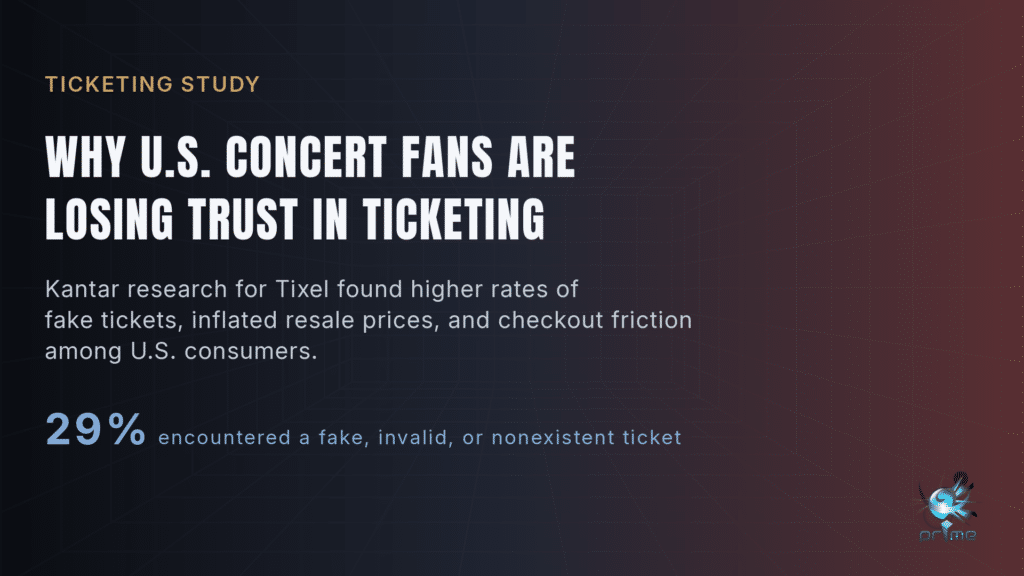
Editorial graphic about declining trust in U.S. concert ticketing, citing Kantar research for Tixel and noting that 29% of U.S. consumers encountered a fake, invalid, or nonexistent ticket.

Why U.S. Concert Fans Are Losing Trust in Ticketing

September 22, 2026 by PrimeEV
Concert Industry, Live Events, Live Music, Music Industry, Ticket Fraud, Ticket Resale, Ticketing, Tixel

Why U.S. Concert Fans Are Losing Trust in Ticketing

American concert fans still place enormous value on live events. The process of getting through the door, however, appears to be testing their trust.

New research conducted by Kantar for ticket resale marketplace Tixel found that U.S. consumers reported higher levels of ticket fraud, inflated resale pricing and checkout friction than respondents in the U.K. and Australia.

The findings come from Tixel's Future of Ticketing Report: The Live Equation 2030, based on a Kantar survey of 5,107 consumers across the United States, United Kingdom and Australia. The sample included 1,522 U.S. respondents who had purchased a ticket, attended a ticketed live event or wanted to attend one during the previous 12 months.

U.S. Fans Report More Ticket Fraud and Inflated Resale Prices

Among U.S. respondents, 29% said they had encountered a fake, invalid or nonexistent ticket during the previous year. The finding points to a significant trust problem at a particularly sensitive point in the live-event economy: the moment when a fan commits money to attending a show.

Resale pricing presents another challenge. 56% of U.S. respondents said they had paid a resale price they considered significantly inflated, the highest percentage among the three countries studied.

According to an analysis published by EDM.com, two-thirds of American respondents had previously purchased a resale ticket, while 75% believed bots or brokers were acquiring tickets and reselling them at inflated prices.

Checkout Fees Are Driving Purchase Abandonment

The problem is not limited to the secondary market.

The research found that 28% of U.S. respondents had abandoned a ticket purchase because of processing fees or unexpected charges at checkout. That compares with 20% of respondents in both the U.K. and Australia.

For promoters, venues and ticketing companies, that number is especially important because the customer has already progressed deep into the purchase process. The fan has discovered the event, evaluated the artist and price, selected a ticket and reached checkout — only to walk away when the final cost changes.

That makes fee transparency more than a customer-service issue. It can directly affect conversion.

Fans May Pay More for Certainty

One of the more interesting findings is that consumers do not appear to be focused exclusively on obtaining the lowest possible ticket price.

Among U.S. respondents, 78% said they would rather pay more for a verified or guaranteed ticket than save money on one they considered uncertain.

Another 67% said knowing they could resell a ticket if their plans changed made them more comfortable purchasing it in the first place.

That suggests flexibility itself has value. A ticket that can be securely transferred or resold may reduce the perceived risk of committing early, particularly when a concert is months away.

The broader report summary from the Association of Artist Managers, describes this as a growing demand for certainty: consumers want confidence that tickets are legitimate, prices are understandable and their purchase will retain some flexibility if circumstances change.

The Ticket Price Is No Longer the Entire Value Equation

The research also points to a broader shift in how consumers evaluate live events.

Fans increasingly appear to be judging the value of the entire night rather than the ticket in isolation. That calculation can include the ticket price, fees, transportation, food and drinks, production quality, atmosphere, time commitment and the confidence that the experience will ultimately justify the total expense.

Tixel's report describes five forces shaping this behavior: social participation, elevated experiences, emotional value, purchase certainty and changing trust in an increasingly algorithm-driven environment.

That matters because a lower face-value ticket does not necessarily create a strong value proposition if the customer later encounters large fees, uncertain resale options or poor confidence in the purchase itself.

Trust Can Affect Early Ticket Sales

For independent promoters in particular, the findings reinforce the importance of reducing uncertainty during the early stages of an onsale.

Early ticket buyers accept more uncertainty than customers purchasing immediately before an event. They are committing money further in advance, often before they know exactly what their schedule will look like months later.

Transparent pricing, credible ticketing partners, straightforward refund and transfer policies, and reasonable resale options can therefore influence more than customer satisfaction. They may also help remove reasons for a prospective buyer to delay making a decision.

That relationship between confidence and early commitment is especially important because initial sales velocity can shape how an event develops. Strong early demand provides promoters with useful information about pricing, advertising and audience response while also creating visible momentum around the event.

A Commercial Report With Useful Data

There is an important qualification to the research.

Tixel operates a ticket resale marketplace, meaning several of the report's recommendations — particularly those supporting verified resale and greater resale flexibility — align with the company's commercial interests.

That does not invalidate the survey results, but the distinction matters when interpreting the report's policy conclusions. The underlying consumer research was conducted by Kantar, while Tixel commissioned the study and provides the broader industry interpretation.

An analysis by the Australian Live Music Business Council similarly notes Tixel's commercial interest while describing the three-country comparison as one of the report's most useful elements.

The Bigger Problem Is Friction

The report does not suggest that Americans have lost interest in concerts. If anything, the opposite appears true.

The problem is the amount of uncertainty and friction standing between interest and attendance.

When fans encounter fraudulent tickets, dramatically marked-up resale inventory or unexpected fees at checkout, the experience can erode confidence not only in a particular transaction but in the broader ticket-buying process.

For the live-events industry, that creates a relatively straightforward challenge: make it easier for fans to understand what they are paying, know that their ticket is legitimate and feel comfortable committing to the purchase.

The artist may still be what makes someone want to attend. Increasingly, however, the quality and transparency of everything surrounding that ticket may determine whether they actually buy it.

MORE FROM PRIMEEV NEWS

divider
VIEW ALL
  • Charlotte de Witte at the Great Pyramid of Giza news banner with ivory and gold text over a muted photograph of a Giza pyramid and the Sphinx.
    Charlotte de Witte at the Great Pyramid of Giza
  • “Streaming Fraud Under Scrutiny,” announcing a U.S. Copyright Office inquiry into artificial streams, AI-generated music, royalty fraud, and potential effects on venue selection and ticket sales. Gold and white text overlays a dark blue digital figure, with the Prime logo at lower right.
    U.S. Copyright Office Opens Streaming Fraud Inquiry With Live Music in Focus
  • Aerial view of London’s The O2 beneath a blue overlay, with headline text announcing AEG and O2’s naming-rights renewal through 2038.
    AEG and O2 Renew Naming Rights Through 2038
Previous »

Newsletter Registration

Follow Us


  • Site Terms Of Use
  • Privacy Policy
© Prime Entertainment Ventures, LLC All Rights Reserved.